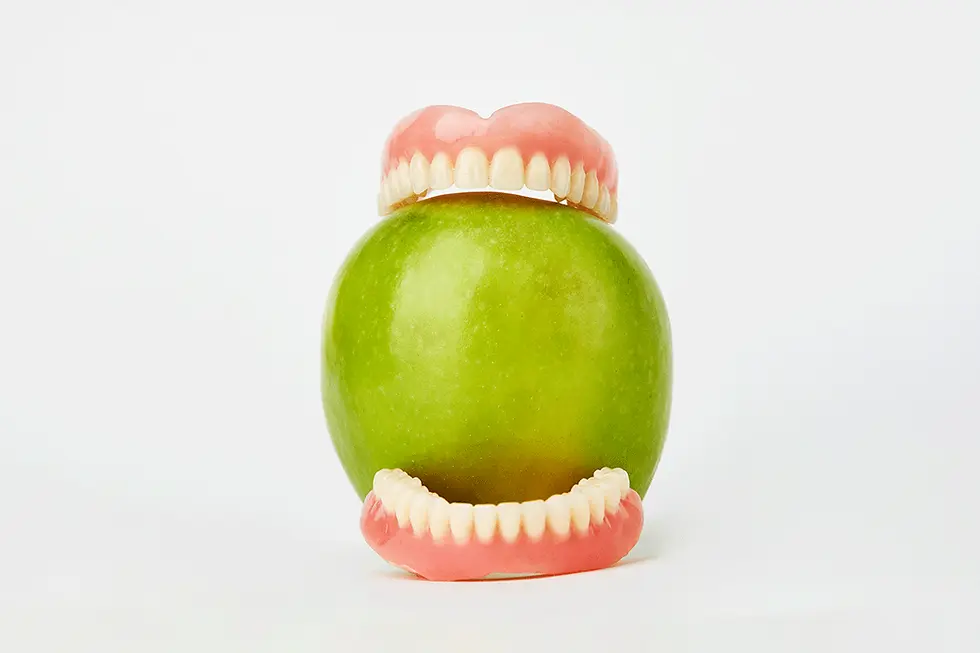
What You Can Eat With New Dentures, Week by Week


Nobody hands you an eating schedule with a new set of dentures. Most people get a short list of foods to avoid and then spend the next few weeks working the rest out by trial and error, usually at the dinner table, usually in front of other people.
It goes better if you know roughly what to expect at each stage. The overall shape is the same for most patients: liquids and very soft foods at first, gradually adding texture, then reintroducing the harder and chewier things last. How long each stage takes varies quite a lot from person to person, and your own dentist's instructions always come before anything you read online.
First, which kind of dentures do you have
This matters more than anything else in this article, because the two situations are not the same.
Immediate dentures are placed right after your teeth are removed, so your gums are healing underneath them from day one. Eating is more restricted at the start, the fit changes as swelling goes down and the tissue underneath reshapes, and adjustments or a reline are an expected part of the process rather than a sign something went wrong.
Conventional dentures are made after your gums have healed. There is no surgical recovery happening underneath, so the adjustment is about learning to use them rather than protecting a healing site. It is still a learning curve, just a different one.
If you are not sure which you have, ask at your next appointment. It changes what is reasonable to expect.
The first days: liquids and very soft foods
Start with things that need no chewing at all. Soups that are not too hot, broths, yogurt, applesauce, pudding, smoothies, mashed potatoes, refried beans, scrambled eggs, oatmeal that has cooled and softened.
A few things help more than people expect:
Take small bites. Smaller than feels necessary.
Chew on both sides at the same time. This is the single biggest change from natural teeth. Chewing on one side tips the denture and lifts the other side, which is what causes most early slipping. It feels deliberate and awkward at first and becomes automatic surprisingly fast.
Let hot food cool a little more than you used to. An upper denture covers the palate, which is where you normally sense heat, so you have less warning than you are used to.
If you have immediate dentures, follow your post-operative instructions on this stage specifically, including anything you were told about avoiding straws.
Adding texture back
Once eating soft food stops taking concentration, start adding foods that require gentle chewing but do not fight back. Soft pasta, fish that flakes apart, ground meat, canned or very ripe fruit, cooked vegetables, soft bread without a hard crust, rice, beans.
This is where most people notice their bite feels different rather than weak. That is normal. You are relearning a mechanical skill.
Cut everything smaller than you would have before. Meat off the bone rather than on it. Sandwiches quartered rather than halved. Anything you would previously have bitten through, cut instead.
Returning to firmer foods
Firmer foods come back gradually, and the order matters less than the technique. Chicken, cooked greens, softer raw vegetables, most cheeses, well-cooked meats.
Two habits do most of the work here. Use your back teeth rather than your front teeth for anything that takes force, because biting straight down with the front of a denture is what levers the back of it loose. And keep chewing evenly on both sides.
The foods that stay difficult
Some things stay awkward indefinitely, and that is not a sign your dentures are wrong.
Corn on the cob and whole apples are front-teeth foods by design. Both are manageable if you take the corn off the cob and slice the apple.
Steak and other tough meats need slow work and small pieces. Marinating, slow cooking, and cutting across the grain all make a real difference.
Popcorn, nuts, and seeds are less about chewing force and more about the hulls and fragments working their way under the denture, which is genuinely painful. Some denture wearers give them up. Others manage them and accept they will need to rinse afterward.
Chips and crusty bread are possible for many people once they are past the adjustment stage, especially with smaller pieces and back-teeth chewing. They tend to be the last things to come back.
Sticky foods like caramel and taffy pull at the denture directly. Most people decide they are not worth it.
Salad surprises people. Raw leafy greens are not hard, but they are slippery and they wrap, which makes them harder to control than a piece of chicken. Chopping salad finely solves most of it.
When something is not going right
The adjustment period involves some soreness and some slipping. It should be improving, not staying the same or getting worse.
Contact the clinic if you have a sore spot that keeps returning in the same place, if the denture is loose enough that you cannot eat soft food comfortably, if there is bleeding, or if eating is still painful after your gums have had time to settle. Sore spots usually mean the denture needs a small adjustment, which is a short appointment, not a remake.
Do not try to file or adjust a denture yourself, and do not rely on over-the-counter kits to fix a fit problem. Both tend to turn a small adjustment into a larger repair.
Getting help in Durham
Local Start Dental is a nonprofit dental clinic in Durham providing dentures, repairs, relines, and adjustments, with sliding scale fees for qualifying patients.
370 Jackson Street, Durham, NC 27701 919.569.5533
Contact us to schedule an appointment.
This article is general information about adjusting to new dentures and is not clinical advice or a substitute for your dentist's instructions. Healing and adjustment timelines vary between patients, and guidance for immediate dentures placed after extractions differs from guidance for conventional dentures. Follow the post-operative and care instructions you were given, and contact the clinic with any concerns about fit, pain, or healing.